
New Zealand Marks 25 Years of Polymer Banknotes
Thursday, July 18, 2024
New Zealand adopted polymer banknotes in 1999. At the time, Brian Lang was Head of Currency at the Reserve Bank of New Zealand (RBNZ). To mar k the 25th anniversary of polymerisation, we sat down with Brian to discuss the rationale behind the transition and assess its results.
Why did New Zealand adopt polymer banknotes?
There were several reasons. Evidence out of Australia was showing polymer banknotes were stronger, cleaner, and more cost effective. Critically, they were also far more secure against counterfeits.
Australia had originally developed polymer banknotes in response to the significant counterfeit risk that accompanied the proliferation of advanced imaging and printing technologies. While New Zealand didn’t have a major problem with counterfeit banknotes by international standards, forgeries were still a nuisance and added cost to management of the cash cycle.
At the RBNZ, we were in the process of strategically reviewing all operations, and the evidence appeared to show polymer offered a wide range of benefits with no major drawbacks.
Ultimately, that has proven to be the case.




How was the transition to polymer banknotes managed and staged in New Zealand?
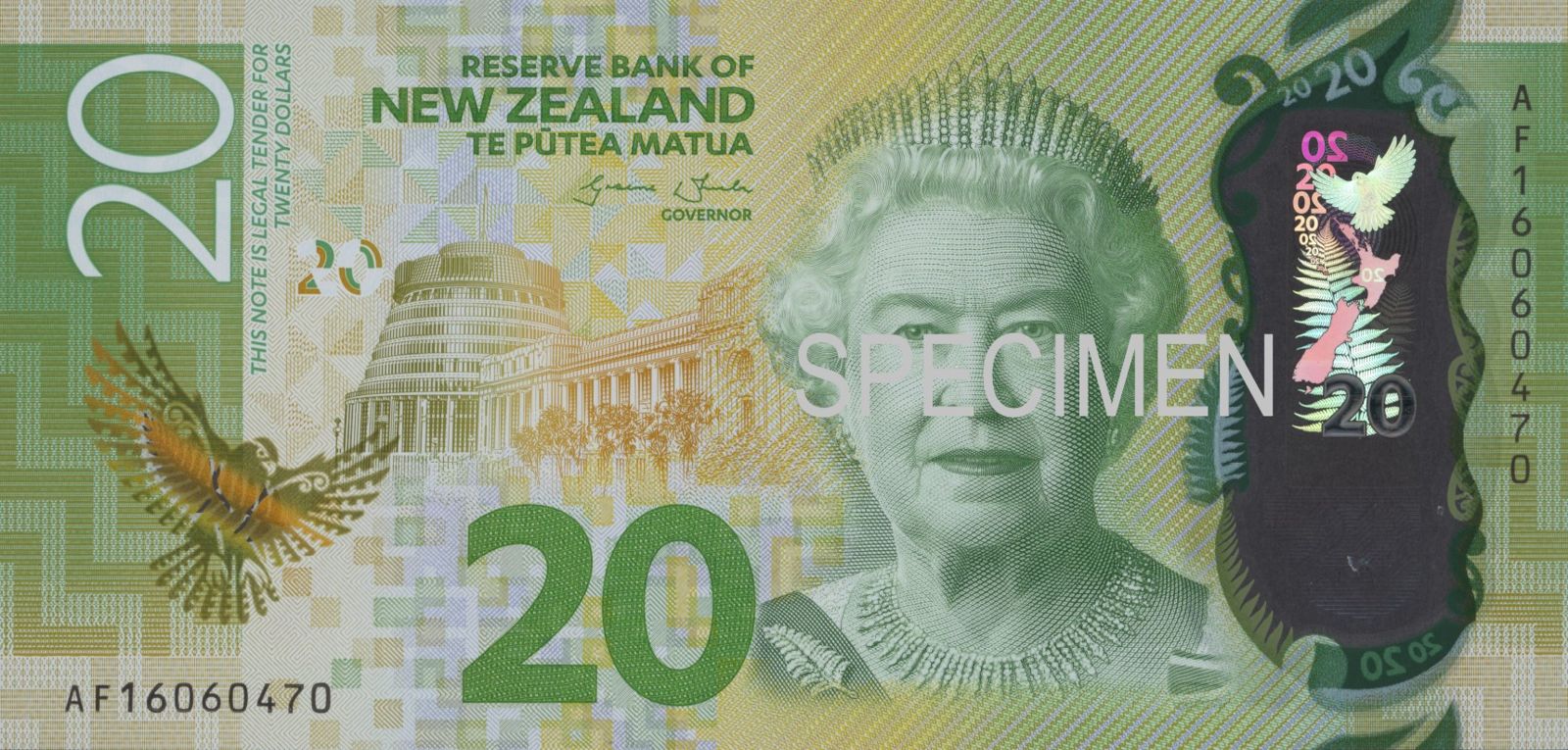
We started with the $20 banknote in May 1999. This was by far the most common banknote, making up more than half of all notes in circulation. By March 2000, the remaining denominations had all been converted. Since then, a second series has also been launched on polymer.
How did the first polymer series compare to the previous cotton-paper banknotes, in terms of design and security features?
New Zealand had issued a new series on cotton-paper substrate not long before, in 1991/92. When we launched the polymer notes, we retained the same note size, portraiture, and other key features. So, the new notes were familiar, but they had important differences, too.
The most notable change was that there were two new windows which could be viewed from either side of the note – which helped aide public recognition and prevent counterfeits.
Other security features included intaglio, offset, letterpress and micro-printing, as well as intricate patterns, visible and invisible fluorescence and phosphorescence, and metallic ink.
How did the public respond to the introduction of polymer banknotes?
The response was very positive.
Media reports centred on the fact polymer banknotes can be recycled; the hygiene benefits of their non-absorbent surface; and the fact they can survive being put through the wash.
Public surveys conducted in November 2000 also showed a high degree of acceptance, with 74% of the public and 90% of retailers preferring or strongly preferring the polymer notes.
The same survey showed 90% of the public and 100% of retailers considered polymer to be cleaner than cotton-paper, while 93% of the public and 100% of retailers agreed that polymer banknotes retain their quality longer.
How have polymer banknotes impacted durability and issuance costs over time?
Let’s stick with the $20 banknote as an example. The most recent data from the Reserve Bank of New Zealand shows it lasts 4.8 times longer in circulation than the prior cotton-paper banknotes. This reduces the number of notes that need to be printed, which in turn lowers issuance costs.
Even immediately after the transition, the savings were clear. While upfront costs were higher, these were recouped within a few years, thanks to the durability of polymer banknotes.
To put this in context, the issue cost per note in circulation decreased by 58 per cent between 1997/98, when all notes were issued on cotton-paper, and 2000/01, when the transition to polymer was fully complete. And there were additional savings on top of this too.
The fact that polymer retains its integrity longer negated the need to continuously check notes for fitness, and this allowed the RBNZ to scale down its involvement in distribution. We began to operate predominately as a wholesale supplier, saving millions of dollars by closing processing centres.
With polymer, the processing burden is a lot lower. Before we transitioned, in 1997/98, RBNZ processing machines removed 57% of all notes in circulation because they’d become unfit. After the switch, in the three years to 2007, that number had dropped to an average of 12%.
An overall estimate in 2007 found switching to polymer had already saved the RBNZ $23 million in issuing costs, while downstream costs in terms of cash operations during distribution had produced savings of $81 million.
Were there any major challenges in other parts of the cash cycle?
No. There were very few hurdles. In terms of cash handling systems like ATMs, for example, converting the entire system took about one month. It only required a minor software upgrade, and this was mostly completed by branch staff in commercial banks. In fact, one of the main ATM servicing companies reported a 50% decline in fault call-outs.
So, overall, would you say New Zealand’s polymer banknotes have been a success?
Yes. The evidence clearly shows polymer banknotes are stronger, more secure, cleaner, greener, and more cost-effective.
Disclaimer
‘The views expressed are those of the author, and do not necessarily represent the views of the Reserve Bank of New Zealand’
Additional Resources from ATM Industry Association
- 5/22/2026 - Stronger Together Connecting a Global Community to Advance the Future of Payments and Financial Access

- 5/13/2026 - The Role of Cash in Times of Crisis: Implications for the Payments Ecosystem
- 3/5/2025 - PAYMENT CHOICE: WHY IT IS IMPORTANT TO GIVE THE CHOICE TO THE CONSUMER
- Show All ATM Industry Association White Papers
- 6/1/2026 - ATMIA: The Best of May
- 5/27/2026 - 2026 Diary of Consumer Payment Choice
- 5/27/2026 - 52% of Americans Say Cash is King
- 5/27/2026 - Consumers cling to cash
- 5/27/2026 - Protecting Payment Choice for All Americans
- Show All ATM Industry Association Press Releases / Blog Posts




































 Email
Email Social Media


 Bookmark ATMIA.com
 RSS
RSS